Lebanon Part 2 – Baalbek and Byblos

Since Lebanon is tiny, it was easy to do day trips with Beirut as home base. We did an organized day trip to the Beqaa Valley to visit the Byzantine era city of Anjar, the ruins at Baalbek, and the super fun Ksara winery and cave complex. Jeff and I also did an independent trip to the city of Byblos.

The Beqaa Valley

The drive from Beirut to the Beqaa Valley is about 30 miles, but the two places are quite literally worlds apart. It doesn’t seem logical that you can drive between them in 1.5 hours. While Beirut is wealthy, urban, and westernized, Beqaa is poor, rural, and home to both Hezbollah and the bulk of Lebanon’s one million Syrian refugees. As we began to drive, our guide calmly told us, “You’re going to start seeing a heavy military presence and security check points. DON’T TAKE ANY PHOTOS. Everything is totally fine, but DON’T TAKE ANY PHOTOS.” Got it.

We did indeed see a heavy military presence and lots of soldiers, but what struck us most was how poor the Beqaa Valley appeared. We stopped for breakfast in a small town near Zahlé, and were swarmed by women and children begging. Much of the Beqaa Valley is farmland, and we saw Syrian refugee camps interspersed with the farms. The camps were tidy rows of small, white Tyvek covered shelters with tires on top to secure the coverings. Obviously, we didn’t get any photos (NO PHOTOS!), but here is an image posted by an international aid organization of one of the camps we passed.

bekaa_1
This is what the Syrian refugee camps we saw in Beqaa looked like.

As we approached our first stop at Anjar, Jeff loaded up Google maps to check our progress. Apparently Anjar is 12 km (8 miles) from the Syrian border – which was disconcerting and doesn’t seem like something you should find out inadvertently on your phone… ‘Today I accidentally went to Syria…” Adding to the surreality is the fact that 6 years ago Jeff and I stood on the Syrian side of this same border and debated an excursion to Baalbek. We really wanted to see the temples on that trip, but at that time we decided that Lebanon was a bit too dangerous so we stuck with Syria. The sad irony.

I think the whole bus was relieved when stopped driving toward the border and arrived at Anjar. The city of Anjar was built between 705-715 AD as a trading cross-roads between Damascus and Beirut. Even though it was built by the Umayyads, the city has a very Roman style with the Cardo Maximus (main street running north-south) and Decumanus Maximus (main street running east-west) still beautifully preserved. Excavations have found over 600 shops have been lining these streets, and several elaborate bath complexes have been uncovered. Sadly, the Umayyad dynasty fell just 100 years after the founding of Anjar, and the city was quickly abandoned. They did all that work for 100 years of use… lame. Because the city was abandoned, however, the layout is well preserved and it’s easy to image how Anjar would have looked in its prime.

While Anjar was lovely, the Roman era temples at Baalbek were the true stars of the trip. The temples were built on a hilltop in Baalbek, and the surrounding areas have evidence of human habitation dating back to 7000 BC. This place is old. Most likely the current temples were build on top of older Canaanite temples from between 3000 and 1500 BC. The ‘modern’ day temple complex was built over many centuries between 200 BC and 200 AD, and consists of the Temple of Jupiter, the Temple of Bacchus, and Temple of Venus.

Each of these temples is spectacular individually, but to consider this site as a single unit is really impressive. The corner stones of the various temples weigh between 100 and 300 tons. TONS! When you actually see how big these stones are and realize that humans – mere mortals – somehow built this thing, it just boggles your mind. The Temple of Jupiter has these amazing pink marble columns imported from Aswan in Egypt. EGPYT! The columns had to be shipped up the Nile, taken across the Mediterranean, then somehow make the journey across the steep Mount Lebanon range. It really does not seem possible that humans could do this. You’d have to have a pretty compelling faith in something to make a feat like this happen.

After spending our day of touring Anjar and Baalbek in a mixture of alarm and awe, we finished with a visit to the Ksara winery and cave complex. We were pleased because we’ve had Ksara wine at home, and we acted like we know something about wine. We don’t. As we toured the caves, we were told the Ksara creation story. In the 1850s, some Jesuit priests were quietly farming the land, when they saw a fox scurry into a hole. They followed the little guy, and discovered a 2 km subterranean cave complex that would be perfect for aging wine. God had blessed them with a profitable business opportunity! Anyway, it’s a fun story and the caves are unique. The tasting room had TONS of animal heads, so I didn’t love that… I guess you can’t win them all.

Byblos

In addition to our organized tour to the Beqaa Valley, Jeff and I did another trip by public bus to the town of Byblos. (side bar: the public buses were fun. You’ll hear more about that in our Tyre adventure, but suffice it to say that if you visit Lebanon, figure out the busses. It is cheap and an adventure to boot.)

The main archeological site in Byblos is unique in that archeologists have actively tried to highlight many different periods of history – not just the Roman era. The site has a prehistoric residential settlement, Egyptian style tombs, a Roman era amphitheater, an amazing Crusader era fortress, and a preserved 19th century home typical of those built upon the ruins. As you look over the site, you can physically see the layers of history and understand that all of these periods we think of as distinct units were really a continuum. More than any place we’ve visited, Byblos gives a picture of the continued thread of human settlement, which is pretty darn cool.

After exploring the ruins of Lebanon’s central region, we headed south to the city of Tyre to continue our adventures in humus, history, and Hezbollah.

Lebanon Part 1 – Beirut

After a month in India and Sri Lanka, we were ready to explore a new part of the world (i.e. we were a little done with curries and a lot done with being hot). Having visited Egypt, Syria, and Jordan in the past, we were both looking forward to exploring Lebanon. We flew from Colombo to Beirut by way of Dubai, and took quite the gerrymandered flight route to avoid Iranian, Iraqi, Syrian, and Israeli airspace. What fun the Middle East is.

We had 10 days in Lebanon – 7 days in Beirut and 3 days in the southern city of Tyre. Lebanon is a tiny country and it is easy to traverse, so we were able to see a lot with Beirut as our home base.

We stayed in the up-and-coming hipster ‘hood of Mar Mikhael at a perfect guesthouse called Baffa House. Baffa House was built in the 1940’s by the owner’s grandfather, and has been beautifully renovated into a four-room guesthouse. The design of the place is exquisite, and all of the furnishings and artwork are from the Baffa family. Each morning the breakfast was a new treat – olives, fresh herbs, so many cheeses, and as our host Samir put it, ‘mama-made’ jams. I got some excellent design and food inspiration from the Baffas.

Beirut is complicated

Luxurious breakfasts aside, Beirut itself is a confusing city – we were lucky to have had a full week there to process what we saw. One of the ‘fun’ things about traveling around former conflict zones is trying to figure out what people mean when they say ‘the war’. In a place like Sri Lanka, it’s fairly obvious, but in Beirut it’s complicated. Do you mean the 1975 -1990 civil war? Do you mean the 1982 siege of Beirut? Do you mean the 2006 war with Israel? To top it all off, the Lebanese constitution officially acknowledges 18 unique religious factions, and each of these factions played distinct roles in the each of the above wars. You see? It’s confusing…

This legacy of conflict has left its mark on Beirut’s urban landscape; the city’s buildings are a mixture of French colonial buildings, bombed out shells of buildings, and new (mildly garish) developments. The downtown area of Beirut is particularly perplexing. On the surface, the downtown appears to be a 4 square block area of beautifully restored historic structures. When you actually walk the streets, however, you realize that many of the buildings are vacant or minimally occupied. It feels like a ghost town, and it’s disconcerting to be the only people on the streets. Well, I take that back. There were plenty of well-armed Lebanese soldiers around, but you know, that doesn’t really help with the vibe. On one afternoon Jeff and I actually decided to go back to Baffa House because we felt so uncomfortable being the only pedestrians in downtown Beirut.

To try to understand the urban complexities of Beirut, we did a walking tour with the lovely Rayya Haddad. Rayya is a friend of the Purwars (remember them from India?) and she’s been living in Beirut for 11 years. As we walked around Beirut’s waterfront, downtown, and the invitingly named ‘Martyr’s Square’, she helped us to better grasp the recent history of Beirut and framed the context of what we saw and felt in the city. Rayya told us that downtown had been severely damaged by bombings and snipers during the civil war, and in 1994 a Lebanese development company called Solidere won the development rights to restore Beirut’s historic downtown. Just as Beiruties were beginning to enjoy downtown again, the streets were shaken by a rash of assassinations (2005 – 2006) and a two-year Hezbollah sit-in (2006 – 2008). This firmly quenched the downtown renaissance, and now it’s a pretty but creepy stretch of empty commercial real estate. All of this turmoil has left Beirut with no real core, and the cultural epicenter of the city is always moving between various neighborhoods.

After several days of crisscrossing Beirut on foot, we did actually find a buzzing, authentic neighborhood- Bourj Hammoud. Settled by Armenian refugees after the 1915 genocide, the ‘non-partisanship’ of the neighborhood means it was relatively untouched during the civil war and is a window into Beirut as it could have been. Instead of bombed out hotels and soulless real estate developments, Bourj Hammoud is a bustling warren of jewelers, grocery stores, Armenian Christian churches, crowded restaurants, and old style Lebanese homes. It was such a treat to explore this ‘authentic’ feeling part of the city, and it highlights how tragic it is that so much of Beirut – and frankly Lebanon – has been destroyed by war.

But the food isn’t complicated – it’s fab

Despite the never-ending political upheaval, a unifying theme in this country is good food. Really, really good food! To dig in deep we did a wonderful food tour with Iffat from Beirut Bites. Iffat’s motto is to take people to places they can’t find on Google, and she delivered. We ate lots of goodies, but stand out places were a hole in the wall flatbread stall, the greatest and tiniest ice cream shop ever, and an amazing falafel place called Aboulziz.

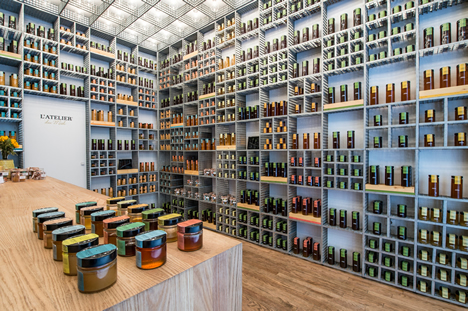
We also went to a GLORIOUS honey shop called L’Atelier du Miel. Run by two engineers, they have a system of moving their hives so that each batch of honey comes from a specific crop. It’s essentially single origin honey, and yes I admit that that was a ridiculous thing for me to say. I am going peak yuppie right now, and I don’t care – this honey is one of the best things I’ve ever eaten. Ever. I’m hoarding the jar I bought like it’s gold. Jeff doesn’t know it yet but he’s going to get extremely limited access to this precious honey. I’m thinking of buying a lesser quality honey and trying to pass it off to him as the same…

Honey heaven
Honey heaven. Heaven!

After a week of walking all over Beirut, we were beginning to feel like we’d scratched the surface of this place. Like I said, Beirut is complicated – but it is this complexity that makes it such a compelling city. Stay tuned for our adventures to Baalbek and Byblos!

But first, let’s do a Beirut Special Feature – Cats of Lebanon.

Cats of Lebanon

Every time Jeff and I see a cat on the street it’s like we’re Japanese tourists first spotting the Eiffel Tower: we freak out, take 10,000 photos, and then talk about it for hours. Every. Single. Time.

Update – CNN’s Breathless Review of Ipoh

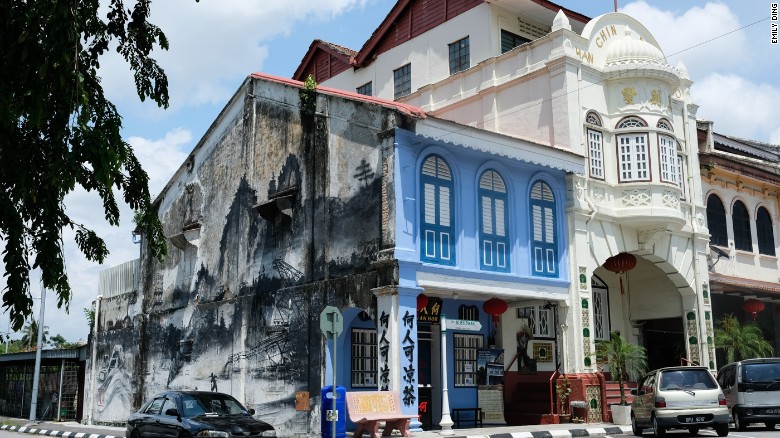
Remember back in March when I wrote of our odd experience in Ipoh? Everyone loves Ipoh, and the Internet is of full of praise for the foodie culture.  We arrived and were unable to find a meal, let alone a foodie meal. And we tried!! Oh, we tried.

Anyway, I just saw this on CNN and had to post it.

Ipoh: A cultural and culinary guide to Malaysia’s rising tourism star

The capital of Malaysia’s Perak state [Ipoh] has always possessed the qualities that make places like Penang so compelling to travelers: a rich architectural, cultural and culinary heritage — but without the crowds. (Though weekends are a different story.)

WTF???? Yeah, there are no crowds, but there is nothing else either. Who are Ipoh’s PR people?? Well, they’re amazingly effective and Trump should take note. Like I said, we actually had a good time in Ipoh, but all of this buzz is completely confusing.

I am pleased, though, that the article specifically calls out the Sinhalese Bar. This statement I agree with – it is a highlight indeed.

Highlights include the Sinhalese Bar, founded in 1931, with its cowboy-style swing doors. It’s a great place to enjoy a beer before carrying on.

And finally, guess who they interviewed??? Our pal John – the host of our homestay.  I hope he toned down the racist comments for the press. Actually, I kind of hope he didn’t…

This homestay in a restored 1908 shophouse is owned by a Malaysian-British couple.

“It’s not the Hilton. People come here for the heritage,” says John Lomax.

Sri Lanka Part 3 – Kandy, and one more Asian Festival

After dropping Matt off in Colombo, Jeff and I took the train inland through the mountains to the city of Kandy. Now the second largest city in Sri Lanka, Kandy was once the capital of the Kandyan Kingdom of Sri Lanka, and operated relatively autonomously until the British decided to invade it in 1815. The scenery surrounding Kandy is absolutely stunning, but Jeff and I were admittedly a little lazy and Asia-ed out so we were pretty lame in the activity department.

Our time in Kandy did hold a highlight – the Esala Perahera parade, which is usually held in August but was put on as a special treat for the visiting PM of India Narendra Modi (exclamation point exclamation point). For several days leading up to the parade we saw official looking people bustling around, and we weren’t sure what all the festivities were about. The main tourist sites in town, the Buddha’s Tooth Temple and Kiri Muhuda Lake, were completely packed with religious pilgrims and security guards. (side bar: we’ve seen an impossible number of ‘Buddha’s teeth’ in our travels. I’m honestly curious – did Buddha have a super-human number of teeth or something?)

Anyway, we had no idea this parade was happening and tried to go home early on the night of the event. As we headed home, our tuk-tuk driver insisted we get out and stay for the parade (after paying him, of course). “See the elephants!!! It starts in an hour!!!”, he told us. We grudgingly got out of the tuk-tuk and after nearly three hours of waiting in the rain the parade began. Even though I was totally irritated at waiting so long for this damn thing, it was fantastic – truly awe inspiring.

The parade has ancient origins but has been going in its modern incarnation since the late 1700s. The parade was ostensibly to give common people access to the Buddha tooth relic, but really it’s a fashion show of the riches of the Kandyan Empire. The procession was impressive, consisting of 42 bejeweled elephants, flame jugglers, stilt walkers, swordsmen, dancers, and entertainers of all kind. The organization and cohesiveness of the performer’s outfits, jewelry, and decorative ornaments was really impressive, and even today is a great show of power and wealth for Kandy. So fine, I guess we were kind of happy that we were good tourists and stayed out for yet another Asian festival instead of watching TV in our underpants at the hotel.

From Kandy we took the train to the airport-proximal town of Negombo to spend a day before our flight. The less said about Negombo the better. Let’s just say that we had a the worst meal of the trip (by a lot) and found the beach underwhelming. Negombo aside, Sri Lanka has been a surprising treat for us, and a great way to end the Asian Portion of our big adventure. Next up – Lebanon. And yes I know, technically this is still Asia, but you know what I mean…

Sri Lanka Part 2 – Mirissa Beach, and yet another Asian Festival

I think we’ve been traveling in south east Asia for too long – experiences are beginning to repeat themselves. After a short 1-hour train ride from Galle, we arrived in Mirissa Beach. The town was preparing for a big annual celebration that involves closing all of the shops and restaurants, everyone wearing white, and a bit of chanting. Humm, sound familiar? The Vesākha festival celebrates the birth and enlightenment of Buddah, but many of the trappings felt quite similar to our Hindu New Year Nyepi experience in Bali.

We stayed in a sweet family run guesthouse called the Panorama Guesthouse. The owner’s teenage daughter Vindi was an excellent host, and the family made sure we ate to the point of illness every morning. This turns out to have been a good thing since restaurants were closed and we had to survive on breakfast leftovers. Vindi’s dad Supul was in charge of organizing the Vesākha celebrations at one of the local temples, and the family was kind enough to take us one evening to see the lighting of the thorana. We got rained on, but that was part of the magic.

The main thing to do in Mirissa is go to the beach. After wasting our first day in town on the fairly lame Mirissa Beach, we headed to a place Vindi told us about called Secret Beach. Secret Beach can’t be accessed on foot, and our tuk-tuk nearly overturned several times on our descent to the beach. I guess that’s what keeps this beach secret. The ocean near southern Sri Lanka is rough and choppy, but Secret Beach has a natural wave barrier of rocks about 30 feet from the shore. This means you can frolic in the calm safe waters while watching an amazing water show as the huge waves crash over the protective rocks. It’s one of the most interesting beaches I’ve ever seen, and we spend an entire two days just hanging out there.

Since Matt was heading home after Mirissa, we booked a sunset nature tour of a nearby lagoon for a last hurrah. Yes, I know, we hate nature so it was a questionable choice, but it turned out to be the kind of nature we like – prissy nature that involves cinnamon tea. The ‘Mirissa Eco Lagoon Safari’ is a quiet and intimate immersion in an ecosystem that is quickly being destroyed. The tour is a one-man operation, and the owner Upathissa has spent his whole life on the lagoon. He pointed out peacocks, mimosa plants that recoil from human touch, and glowing bioluminescent fish. When the sun went down, thousands of fruit bats swarmed overhead as the finale. The whole experience felt like felt like Alice in Wonderland, with Upathissa pointing out hidden displays of nature all around us.

The next morning, we caught a train north to Colombo. From there Matt would make the journey home and Jeff and I would head onward to Kandy – the former seat of the Sri Lankan kings.

IMG_1256
Bye bye Matt!!!!